Stylyze
Product Management
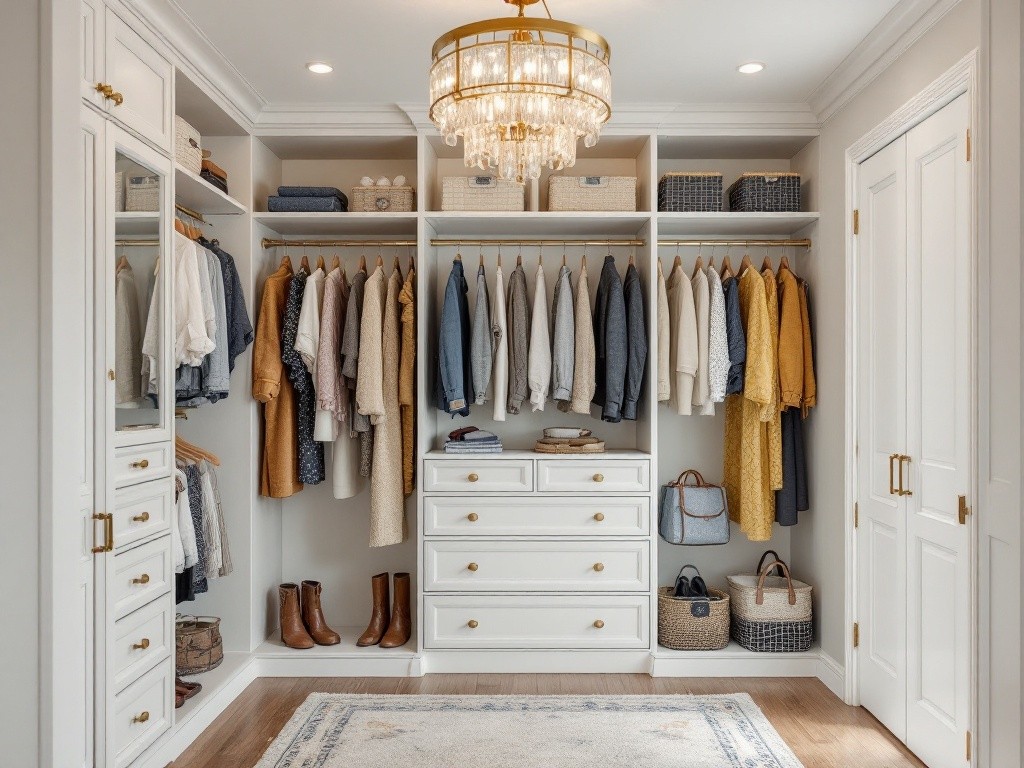
1. The Problem: "Closet full of clothes but nothing to wear"
Through initial exploratory research, including 25+ user surveys and interviews with a target demographic (Millennials/Gen Z, 18-35), I uncovered a universal set of frustrations:
Decision Fatigue: Users felt overwhelmed by choice and struggled to create new outfits from their existing clothes.
Wardrobe Underutilization: A significant portion of a user's wardrobe (estimated 30-40%) remained unused simply because it was forgotten.
Mismatched Purchases: Users found it difficult to visualize how a new item would integrate with their existing wardrobe, often leading to buyer's remorse and unsustainable consumption.
2. The Opportunity: A "Smarter Closet"
My competitive analysis of 10+ fashion tech and e-commerce apps (like Indyx, ACloset, Cladwell, and Whering) revealed a clear market gap. While most apps excelled at e-commerce (selling new clothes) or inspiration (social feeds), few offered practical, AI-driven tools to manage and style what a user already owns.
This presented a "blue ocean" opportunity to build a user-first platform focused on utility and personalization, moving beyond simple inventory to become a true styling assistant.
My Process: From Discovery to Definition
As the product lead, I followed a user-centric product development framework to ensure our solution was Valuable, Usable, and Viable.
Phase 1: User Research & Synthesis
I translated raw interview data and survey results into actionable artifacts to build empathy and guide feature development:
User Journey Map: Visualized the user's current, frustrating process of getting dressed, identifying key pain points and moments for intervention.
3 Core User Personas: Synthesized research into three primary personas who represented the needs and frustrations of our target market.
Key User Personas
Here are two of the three primary personas developed from our research findings:
Persona 1: Chloe ("The Sustainable Shopper")
Bio: 28-year-old marketing coordinator. Tech-savvy, eco-conscious, and prefers to buy high-quality, long-lasting pieces.
Quote: "I want to love everything in my closet and buy less. I just need help seeing the potential in what I already own."
Goals: Maximize her existing wardrobe; Make smart, sustainable purchase decisions; Avoid fast-fashion trends.
Frustrations (Pain Points): Forgets about items in her closet; Unsure if a new item will actually match; Feels guilty about "wardrobe orphans" (items worn only once).
Core Need (for StyleAI): The "Snap & Match" feature is critical for her. She needs validation before purchasing.
Persona 2: Mark ("The Busy Professional")
Bio: 34-year-old software engineer. Values efficiency and logic. His schedule is packed, and he sees fashion as functional.
Quote: "I don't have time or energy to think about what to wear. I just need to look presentable for work every day, fast."
Goals: Minimize time spent getting dressed; Look appropriate and put-together; Eliminate decision fatigue.
Frustrations (Pain Points): Defaults to wearing the same 3-4 outfits; Overwhelmed by choice; Finds setup for other apps too slow.
Core Need (for StyleAI): The "AI-Powered Daily Outfit" and "Bulk Upload" features are his essentials. He needs a "set it and forget it" solution.
Persona 3: Maya ("The Aspiring Influencer")
Bio: 22-year-old university student studying communications. She is a "prosumer" building her personal brand on TikTok and Instagram.
Quote: "I can't be seen in the same outfit twice, but I can't afford a new one for every post. I need to get creative and find 10 ways to style one skirt."
Goals: Create a steady stream of unique outfit content; Experiment with new aesthetics to find her niche; Avoid repeating outfits in her social feed.
Frustrations (Pain Points): "Outfit-block" (like writer's block, but for styling); Struggles to remember every combination she's already posted; Finds it hard to make budget-friendly items look new and different.
Core Need (for StyleAI): She needs advanced "Style Experimentation" (e.g., "lock this item and shuffle 10 new looks") and an "Outfit Calendar" to track what she wore and posted.
Persona-Driven Roadmapping: Our MVP was laser-focused on the core, high-frequency needs of Chloe and Mark. Maya's needs, while valuable, were more complex (e.g., social sharing, outfit history). We made the strategic decision to table these features for Phase 2, allowing us to build a strong foundation before expanding to this power-user segment.
Phase 2: Product Strategy & Prioritization
Product Vision: To become the indispensable AI styling assistant that empowers users to feel confident and sustainable in their fashion choices.
Feature Prioritization (RICE): I led a feature brainstorming session and then used a RICE scoring model to objectively prioritize our MVP. Features like "Snap & Match" and "AI-Powered Outfit Recommendations" scored highest on Impact and Reach, directly addressing the core needs of our primary personas.
Stakeholder Value: I defined clear value propositions for a 2-sided market:
B2C Users: Save time, discover new styles from their own closet, and make smarter purchases.
B2B Stakeholders (Stylists/Retailers): A SaaS platform for stylists to manage clients, and a new affiliate channel for targeted, "matches-your-wardrobe" sales.
Phase 3: Translating Strategy into Action (User Stories)
A critical step was translating our prioritized features into clear, actionable user stories for the development backlog.
EPIC: Wardrobe Digitization (MVP)
As a new user, I want to quickly and easily add my existing clothes to the app, so that I can start getting value from outfit recommendations without a frustrating setup process.
User Story 1: Bulk Upload from Gallery (for Mark, "The Busy Professional")
As a new user ("The Busy Professional"),
I want to select and upload multiple photos of my clothes at once from my phone's camera roll,
so that I can quickly digitize my wardrobe without spending hours manually adding items one-by-one.
Acceptance Criteria:
User can select up to 20 images at a time from their native photo gallery.
A loading indicator is shown during the upload process.
Each successfully uploaded image creates a new "draft" item in the "My Closet" section.
User Story 2: AI-Powered "Snap & Match" (for Chloe, "The Sustainable Shopper")
As a shopper in a retail store ("The Sustainable Shopper"),
I want to take a photo of a new clothing item I'm considering buying,
so that I can instantly see if it matches items I already own and get outfit ideas before I purchase.
Acceptance Criteria:
User can access the "Snap & Match" feature via the main tab bar in one tap.
After capturing a photo, the app presents a results screen within 5 seconds (simulated).
The screen displays at least 3 outfit recommendations from the user's existing wardrobe.
Each recommendation includes the "Style Confidence Score" (simulated).
Phase 4: Defining Success (AARRR Metrics & Instrumentation)
Before building, I defined how we would measure success. I created an instrumentation plan for our core MVP funnel using the AARRR framework.
Acquisition: Where are users coming from?
Metric: Install source (e.g., "Campus Influencer Campaign," "App Store Organic").
Event:
app_installed.
Activation: Are users getting to the "Aha!" moment?
Metric: Activation Rate (Percentage of users who digitize at least 10 items in 24 hours).
Events:
signup_complete,item_digitized,activation_milestone_10_items.
Retention: Are users coming back?
Metric: Day 1, Day 7, and Day 30 Retention.
Event:
app_opened.
Referral: Are users telling their friends? (Phase 2)
Metric: Viral Coefficient (K-factor).
Event:
share_link_clicked.
Revenue: Are users paying? (Phase 2)
Metric: Free-to-Paid Conversion Rate.
Event:
subscription_started.
4. The Solution: A Validated User Experience
Usability Testing & Iteration
I conducted 3 rounds of moderated usability testing with 5 target users, which led to a critical design pivot.
Key Insight: In the initial design, users were confused by the navigation and couldn't find the core "Snap & Match" feature (User Story 2).
Action: I redesigned the main tab bar, simplifying it from 5 icons to 4 and making the central "Snap" button the primary call-to-action.
Result: The task completion rate for the 'Snap & Match' flow improved by 30%, and users reported a significant increase in "ease of use."
5. Defining the "Black Box": Product Requirements for the AI
A PM's role isn't to build the AI, but to define what it must do to solve the user's problem. A key deliverable was this set of requirements for a hypothetical engineering team.
User Problem (for the AI): Users don't just need to see their clothes; they need expert, personalized advice on how to combine them based on context.
Required Inputs (The 'Prompt'):
User's digitized wardrobe (item image, colour, type).
Contextual data (e.g., "Occasion: Work," "Weather: 15°C & Rainy").
A new item to match (e.g., "Snap & Match" photo).
Functional Requirement (The 'Box'): The system must analyze the user's entire wardrobe against the inputs, scoring potential outfits based on matching colours, style compatibility (e.g., formal/casual), and occasion.
User-Facing Output (The Experience):
Present the user with 3-5 ranked outfit recommendations.
Provide a "Style Confidence Score" for each match to build trust.
Explain why it's a good match (e.g., "These colours complement each other").
The Business: Viability & Go-to-Market
A great product must also be a viable business.
Phased Product Roadmap
I authored a 2-phase roadmap to manage scope and validate assumptions iteratively.
Phase 1 (MVP): Focus on user acquisition and retention. Core features: Wardrobe Digitization, "Snap & Match" (simulated), and AI Recommendations.
Phase 2 (Scale): Introduce monetization and B2B features: AR "Virtual Try-On," B2B portals for stylists, and affiliate retailer integration.
Monetization Strategy
I developed a multi-channel revenue model to diversify income streams:
Freemium: Core features are free; a "Pro" subscription unlocks unlimited AR try-ons and advanced style analytics.
B2B SaaS: Stylists pay a monthly fee to manage their clients on the platform.
Affiliate Links: A commission on items purchased through our retail partners that "match" the user's wardrobe.
Go-to-Market (GTM) Plan
Our GTM strategy was designed to build grassroots momentum with a targeted initial launch.
Phase 1 Launch: Target 2,000+ university students (our primary persona) via a campus influencer and promo code campaign.
Success Metrics (KPIs): As defined in the AARRR instrumentation plan, our primary north-star metric for the MVP is Activation Rate (70% of new users digitize 10 items).
7. Real-World Planning: Risk & Collaboration
This section outlines how I would move from a plan to a launch-ready product in a real-world environment.
Risk Analysis & Mitigation Plan
A good PM plans for success; a great PM plans for failure. I identified four key risks for our MVP launch.
Risk Category | Risk Description | Likelihood | Impact | Mitigation Strategy |
|---|---|---|---|---|
Technology | Poor AI Recommendations: The "AI" (even simulated) gives nonsensical matches, destroying user trust. | High | High | (Product-Led) For MVP, launch with a "Wizard of Oz" test, using human stylists to power recommendations to gather training data. (UX-Led) Add a "Rate this Outfit" feedback loop. |
User | "Empty State" Problem: Users sign up but find the "bulk upload" (User Story 1) too much work. They abandon the app. | High | High | (Design) Create a compelling onboarding flow with a "demo closet" to show value before upload. (Feature) Launch with a "Single Item" add as a low-friction alternative. |
Market | Privacy Backlash: Users are uncomfortable uploading photos of their entire wardrobe ("creepy" factor). | Medium | High | (Policy) Proactive, clear-language privacy policy ("We never see or share your photos"). (PR) Use "On-Device Processing" (Phase 2) as a key marketing differentiator. |
Execution | Scope Creep: The team gets distracted by "nice-to-have" features like a social feed. | High | Medium | (Process) Enforce the RICE-prioritized roadmap. Be the "guardian of the MVP" and ruthlessly table all non-essential features to the Phase 2 backlog. |
Cross-Functional Collaboration Plan
A PM's job is 90% communication. This is how I would align the (hypothetical) team.
Engineering:
Kickoff: Lead a backlog grooming session using the User Stories (Phase 3) as the single source of truth.
Handoff: Deliver the high-fidelity Figma prototype (Section 4) and the AI Requirements (Section 5) as the core spec.
Rituals: Run daily stand-ups and bi-weekly sprint planning/retrospectives (Agile Scrum).
Marketing:
Alignment: Share the User Personas (Phase 1) and GTM plan (Section 6) 6 weeks pre-launch.
Collaboration: Co-develop the "campus influencer" campaign messaging, ensuring it speaks directly to Chloe's and Mark's pain points.
Leadership/Stakeholders:
Cadence: Provide a bi-weekly progress update via email and a monthly roadmap review.
Content: The update would focus on 3 things: 1) Progress against the AARRR metrics, 2) Any "Red" status risks and their mitigation plans, 3) Demo of new features.
Outcome: Awarded "Best Business Proposal of the Cohort" for compelling product vision, user-centric design, and viable business strategy.
8. Outcome & Key Learnings
This project culminated in a comprehensive business proposal that was awarded "Best Business Proposal of the Cohort" by a panel of professors and industry professionals.
Key Learning 1: The Power of "No." Prioritization is the most difficult and most valuable PM skill. Using the RICE framework provided an objective lens that depersonalized decisions. It allowed us to confidently de-prioritize a complex "social feed" feature, which would have delayed the MVP, in favour of the core, high-impact "Snap & Match" feature.
Key Learning 2: Test the Concept, Not Just the Clicks. My early usability tests focused too much on "Can the user find the button?" I learned to ask better questions, like "Do you understand what this feature will do for you?" This shift in testing helped validate the value proposition itself, not just the UI.
Key Learning 3: A PM Defines the Problem, Not Just the Solution. My most valuable contribution wasn't the Figma design; it was the "Defining the Black Box" requirements. I learned that a PM's job is to provide a crystal-clear problem definition and success criteria (the metrics) so that engineering can build the best possible solution.


Links.
© 2025 • Snehasini M Antonious